
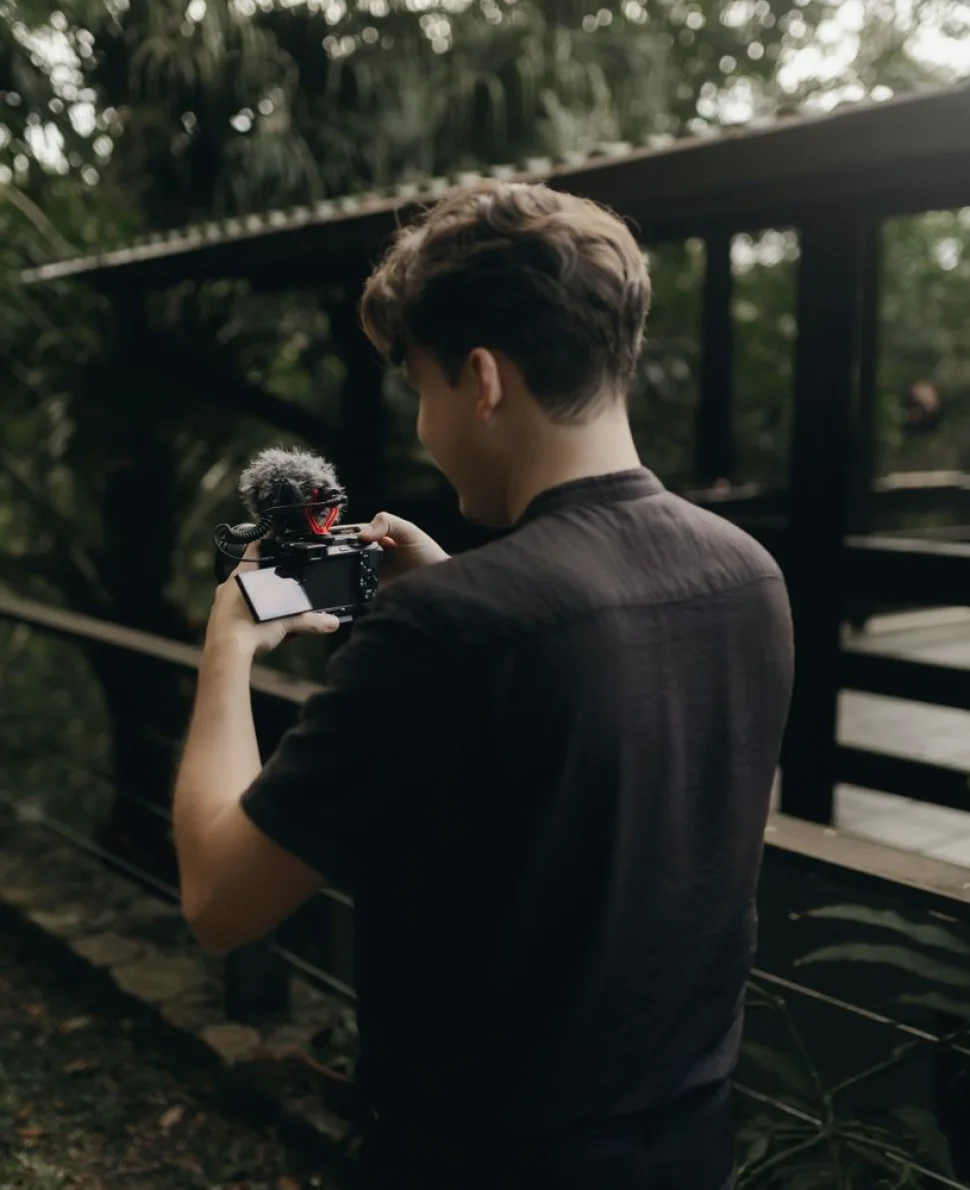
Why the autumn light asks more of you
The first thing students tell us in these weeks is that their usual settings no longer work. Daylight that once stayed steady from morning to late afternoon now shifts every half hour. The sun sits low, throws long shadows across a doorway, and then disappears behind cloud just as your reporter finishes the first take. A camera set carefully at nine o'clock can be wrong by eleven.
Our Field Camera Techniques courses spend a good part of the session on this exact problem. We take learners outside, let them set exposure for a face in open shade, and then ask them to repeat the shot after the light has changed. The aim is not a perfect picture but a habit: check the image on every new set-up, not once at the start of the shoot.
Exposure for faces in low, uneven sun
Low sun creates two traps. Shoot towards it and your subject becomes a silhouette; shoot with it behind you and the interviewee squints and the shadows on their face turn hard. Neither suits a calm piece to camera or a sit-down interview. Daniel Okafor, our lead camera instructor, teaches a simple order of choices: find where the light falls first, then place the person, then set the camera.
Often the best answer is open shade on the side of a building, where the light is soft and even. From there, expose for the skin tones rather than the bright sky behind, and accept that the background may run a little hot. Use zebras or a histogram if your camera offers them, and practise reading them before you are standing in the cold with a deadline.
- Place the subject before you touch the exposure
- Expose for skin, not the sky
- Recheck the image whenever cloud moves
Audio when the weather turns
Autumn brings wind, rain on hard surfaces and traffic noise that bounces off wet roads. Pictures can be rescued a little in the edit; poor sound rarely can. We ask every learner to put on headphones and listen before recording, because the camera's meter will not tell you that a drainpipe is dripping beside your interviewee.
A windshield or fur cover on the microphone is not optional in these months, and nor is moving the interview a few metres away from the worst of the noise. Keep the microphone close to the speaker's mouth, check levels on the loudest answer rather than the first, and record a short stretch of room tone or street ambience once you have finished talking.
- Always monitor on headphones, never on the meter alone
- Fit the wind cover before you leave the car
- Record ten seconds of ambience at each location
Handheld stability in cold and wet conditions
Cold hands shake, wet gloves slip and a heavy camera feels heavier after an hour standing on a damp pavement. Stability in autumn is partly about technique and partly about looking after yourself. We teach learners to tuck elbows in, spread their weight across both feet and let the body act as the support rather than the arms alone.
Wherever there is a wall, a car roof or a railing, use it, and lean rather than grip. Thin gloves that still let you reach the controls are worth more than thick ones you remove at every adjustment. If you are walking with a subject, soften your knees and roll heel to toe; practising this in a corridor beforehand makes the real shot noticeably smoother.
Protecting kit and planning the shoot
Moving between a cold street and a warm building can fog a lens in seconds, so we recommend letting the camera adjust in its bag for a few minutes before you take it out. A small cloth, a rain cover and a spare battery kept in an inside pocket cost little and save a lot of ruined time.
Planning matters just as much. Sunset is early, so work out which shots need daylight and film those first, leaving interiors and cutaways for later. Check where you can park, how long it takes to walk to the location and where you will shelter if rain arrives. A short list written the evening before makes the morning calmer for the whole crew.
- Let the camera warm up in its bag before use
- Carry a lens cloth and a spare battery in a dry pocket
- Film exterior daylight shots first
Practising before the real job
None of this is difficult in itself, but it all needs repeating until it is automatic. We suggest a small routine in the coming months: pick one outdoor spot near you, visit it at three different times of day, and record the same thirty-second shot each time. Review the footage with the sound on, and note what changed in exposure, noise and steadiness.
That kind of low-pressure practice is what we build into our courses, with a tutor beside you to point out what the viewfinder cannot show. If you want to join a small group, the contact page is the place to ask about the next Field Camera Techniques dates, and Tom Whitaker will reply with what is available.
Autumn is a demanding time to shoot, but it rewards operators who prepare. Watch where the light falls, listen before you record, brace your body against the cold and keep your kit dry. These habits cost nothing to learn and carry over to every season. If you would like guided practice, get in touch and we will talk through which course suits where you are now.