
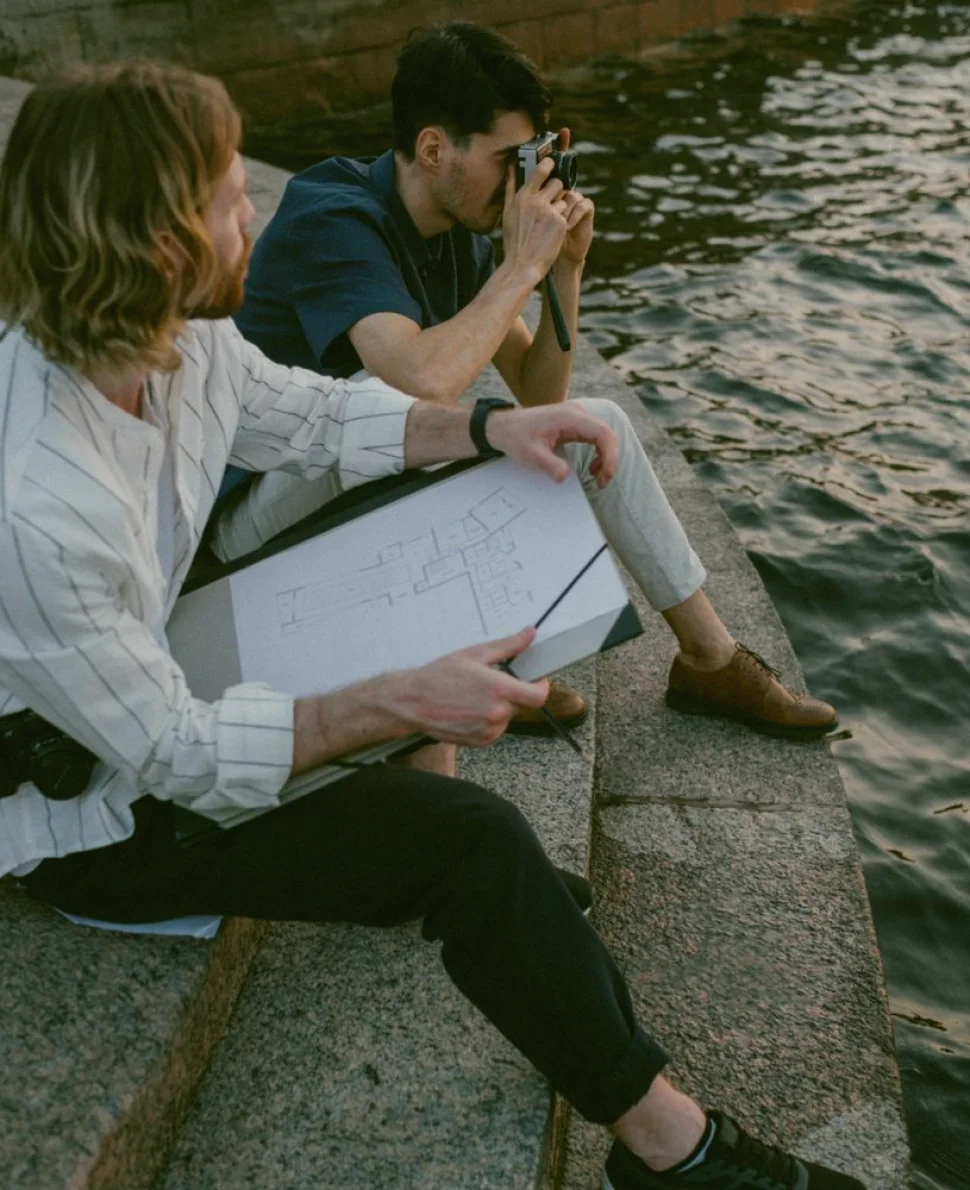
Starting the shoot before the story is agreed
The commonest mistake on a Pairing Day happens before anyone lifts a camera. The reporter has a story in mind, the operator has a different one, and neither has said it aloud. They walk to the location, start gathering pictures, and only discover forty minutes later that the reporter wanted reaction and the operator has been shooting the building.
On our days, each pair gets a short written brief and ten minutes to agree it. We ask for one sentence that says what the piece is about, and one sentence that says what the viewer should see. If the two sentences do not match, the pair talks until they do. It feels slow at the time. It saves far more time than it costs once the edit begins.
Mid autumn gives us a good example, because the light changes quickly and a late start loses the best of the afternoon.
- Agree the story in one sentence before leaving the classroom
- Agree what the pictures must show, not just what the script says
- Write both sentences down so neither of you can drift
Treating the operator as a tripod with a lens
Reporters sometimes brief the operator as if the job were to point the camera where they stand. An experienced operator sees the location differently: where the light falls, where the noise comes from, which angle hides a distracting sign. Ignoring that eye wastes half of what an operator offers.
In our exercises, reporters are asked to walk the location with the operator before deciding where to deliver the piece to camera. Daniel Okafor, our lead camera instructor, often reminds the group that the operator will be living with these pictures in the edit, so their view of coverage matters as much as the script.
We have seen pairs improve markedly after one short conversation at the start: what do you need from me, and what do I need from you?
Shooting without thinking about the edit
Brief to edit is the whole point of a Pairing Day, yet many pairs treat the edit as someone else's problem. They come back with plenty of material but no cutaways, no establishing shot, and an interview that ends abruptly because nobody asked the closing question.
A simple habit helps. Before leaving the location, the pair stops and lists what the cut will need: an opening picture, a way into the interview, two or three cutaways that illustrate the script, and a clean ending. If one item is missing, they shoot it there and then, while the location is still available.
Reporters who have sat through their own edit tend to write differently afterwards, leaving room for pictures to carry the story rather than describing what is already on screen.
- List the sequences the edit will need before you pack up
- Record a few seconds of clean ambient sound at each spot
- Shoot the ending before the light or the interviewee goes
Leaving audio until last
Pictures get the attention and sound gets the blame. A pair will spend ten minutes finding the right frame and thirty seconds checking the microphone, then discover in the edit that a passing lorry sits under every line. Wind, traffic and echo are the three problems we meet most.
The fix is to treat audio as a joint responsibility. The operator monitors levels on headphones, and the reporter learns to stop mid-sentence when something intrudes instead of pressing on. Neither is being awkward; both are protecting the piece.
We ask pairs to record a short test line in every new position and play it back before committing. It adds a minute and removes a good deal of regret.
Not rehearsing the handover moments
Most of the awkwardness in a live or recorded piece comes at the joins: the reporter finishing a line and the camera needing to move, a cue that one person gave and the other did not see, a retake where nobody remembers where the first take started. These are small moments, and they are rarely discussed in advance.
Priya Shah, who teaches planning for live work, encourages pairs to agree simple signals before the camera rolls: a nod to start, a hand raised for a pause, a word for a retake. The signals do not need to be clever. They need to be shared.
Rehearsing the walk-and-talk or the move from interview to cutaway once, without recording, usually removes the hesitation that spoils the first real take.
- Agree a start cue and a stop cue
- Decide who calls a retake
- Walk any movement once before recording it
Skipping the review at the end of the day
The final mistake is leaving without looking back. Pairs are tired, the light has gone, and it is tempting to pack up and head home. Yet the review is where most of the learning sits, because it is the only time the reporter and operator see their choices side by side.
We set aside time at the end of each Pairing Day to watch the cut together with a tutor. The questions are practical: did the opening picture earn its place, did the script duplicate what we could see, where did the audio let us down. Nobody is graded against a checklist; the aim is for each pair to name two things they would do differently next time.
Pairs who do this tend to start the next story with a better conversation than they ended the last one.
None of these mistakes is about talent. They come from hurrying, assuming and leaving things unsaid between two people who each hold half of the story. A Pairing Day gives reporters and operators a safe place to make them, notice them and replace them with habits that hold up in a real newsroom. If you recognise your own working pattern in any of the sections above, that is a good place to begin.